Thread: Group Exhibition
-
UPPER & LOWER GALLERIES
THE SCHOOLHOUSE
LONDON
28 March - 16 May 2026
Free Admission
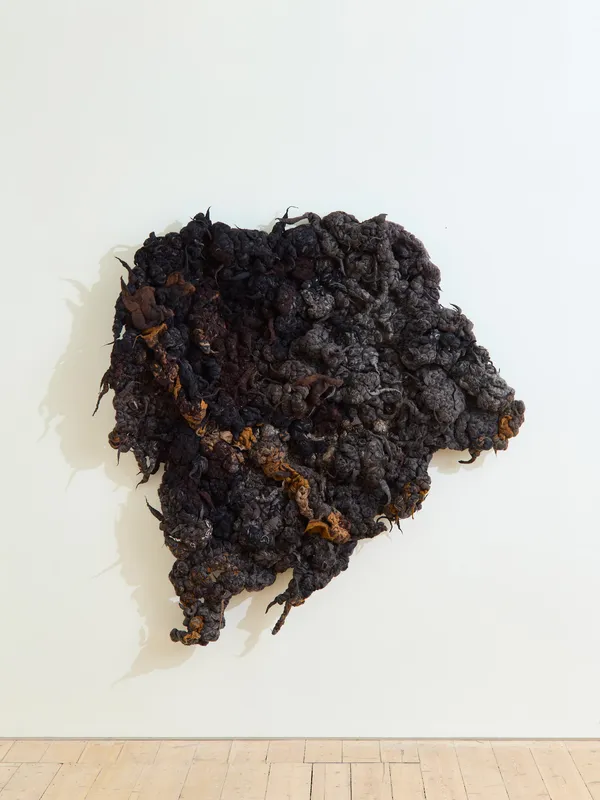
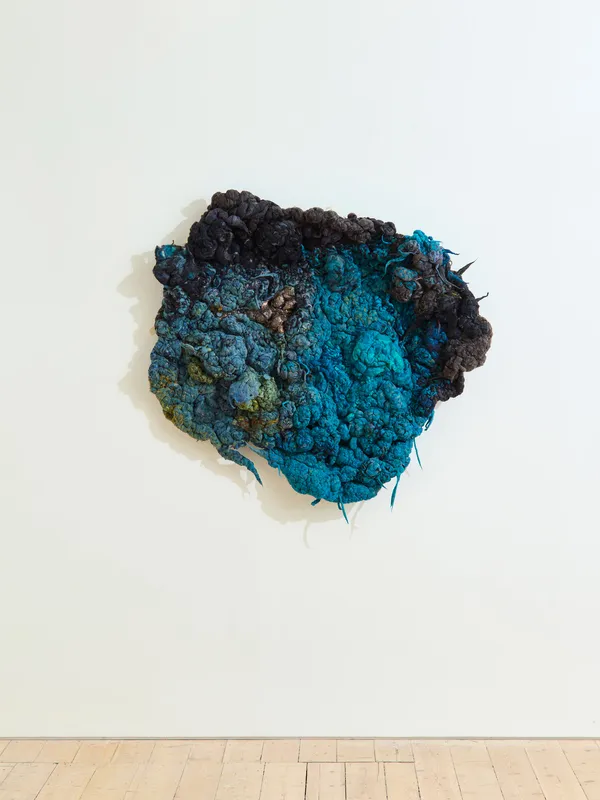
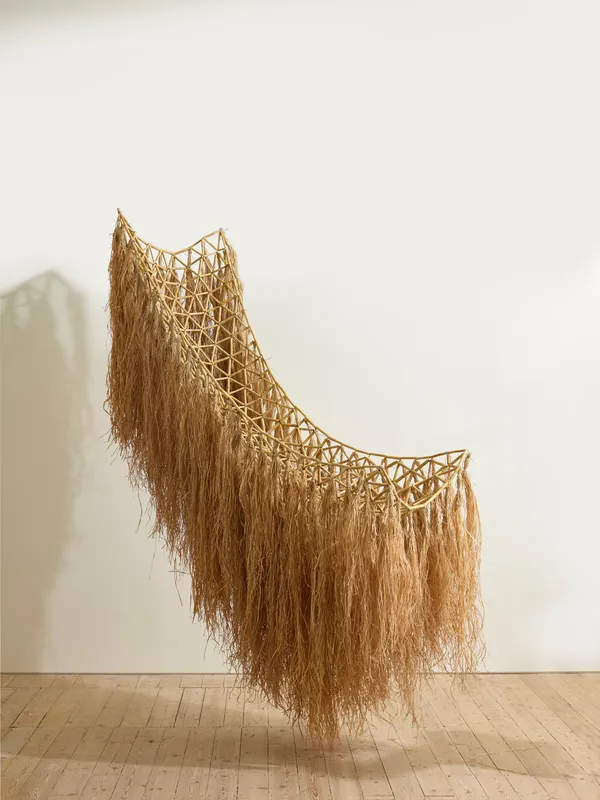
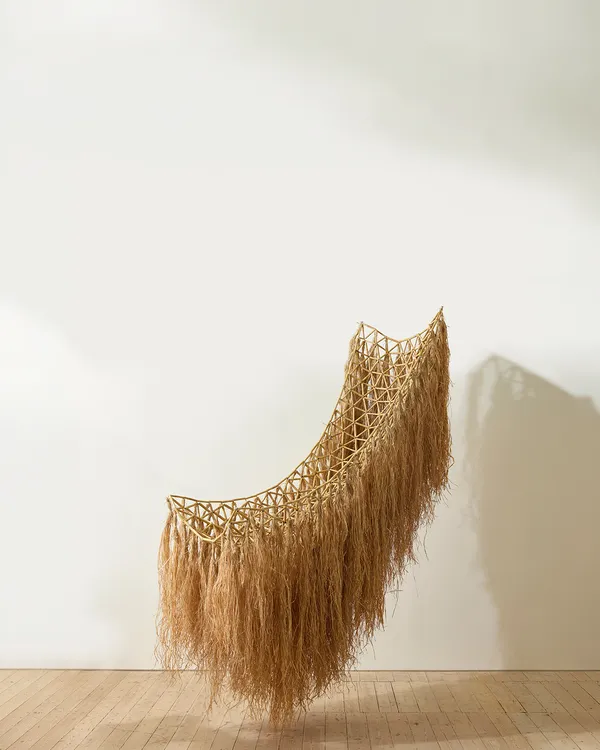
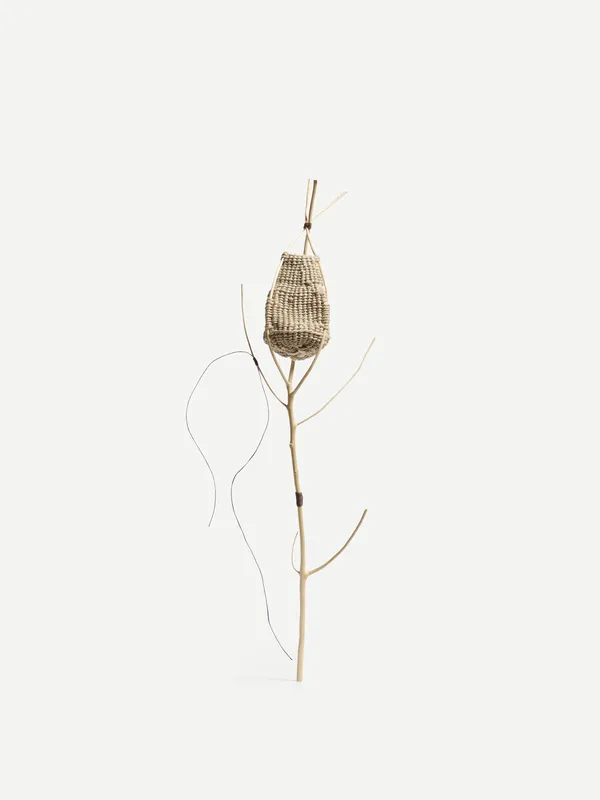
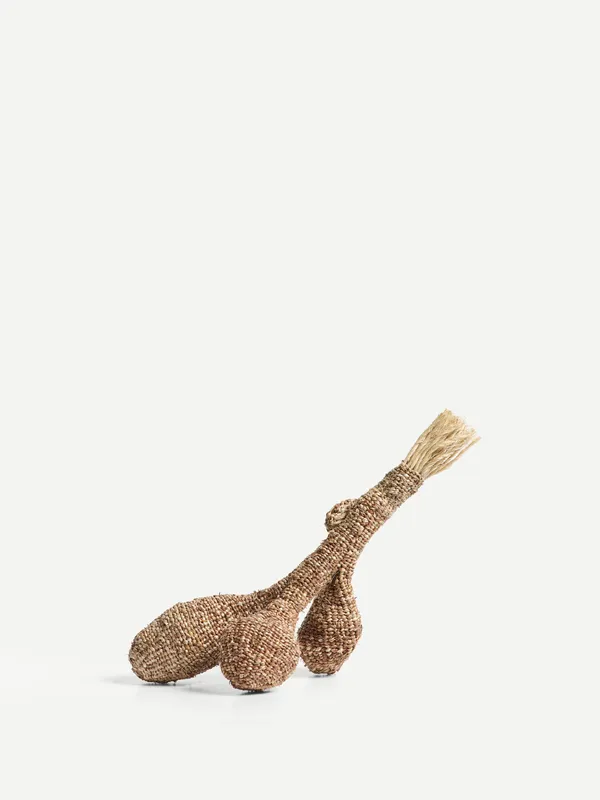
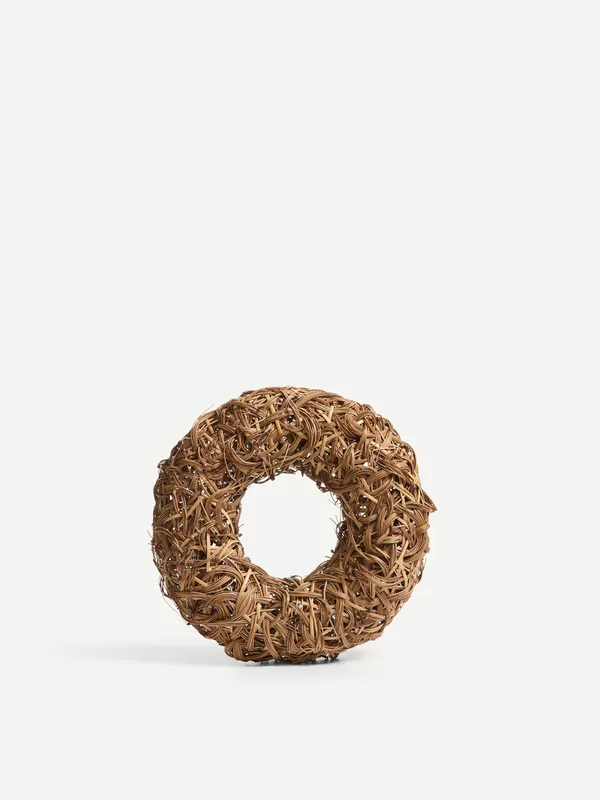
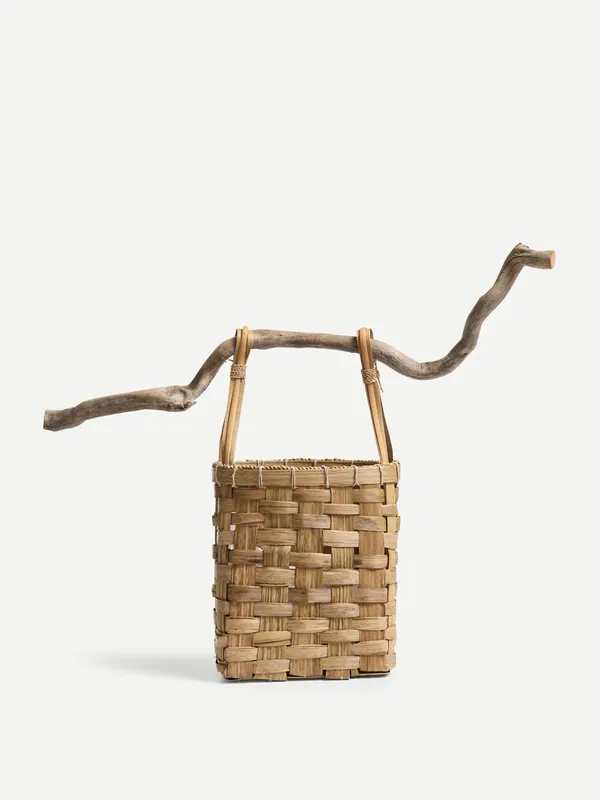
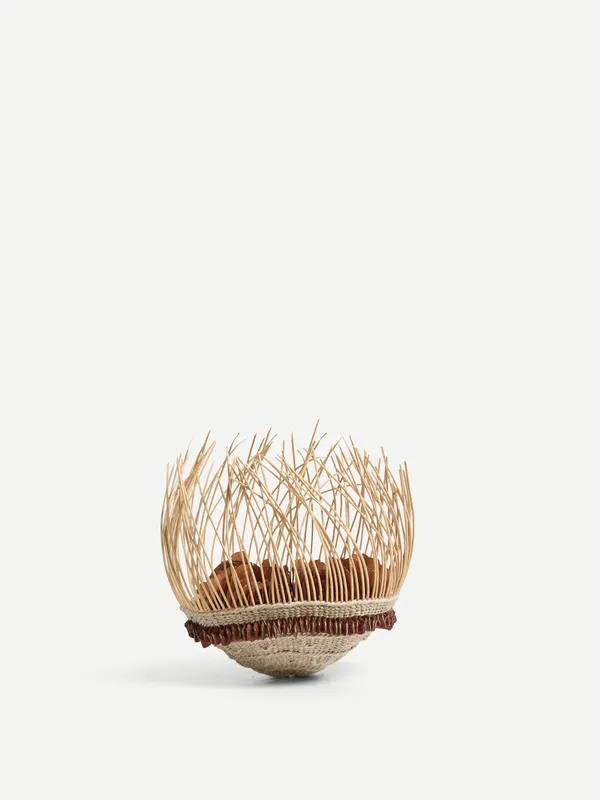
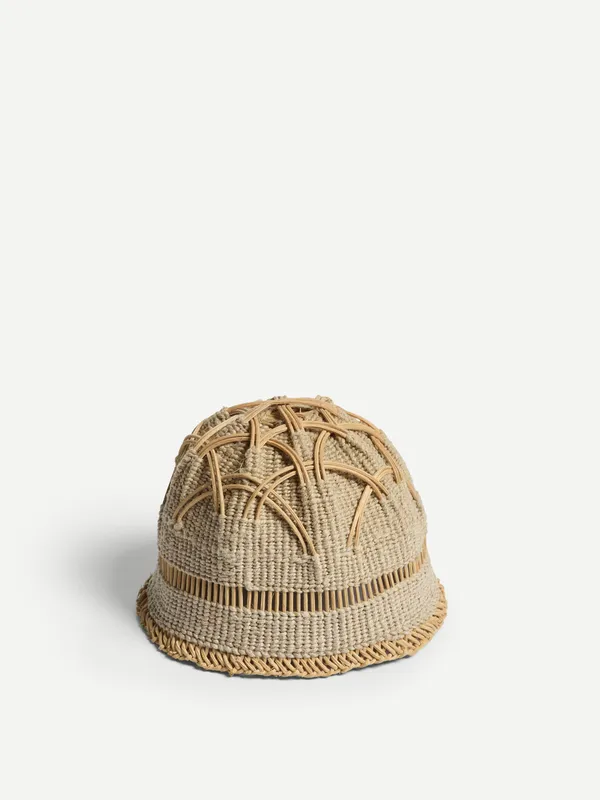
As a Gallery, we are at the forefront of recognising material and process-led art as a significant movement within the cultural landscape of the visual arts. 'Thread' explores the notion that weaving is both a thought or idea, as well as a process of making that speaks to the fundamental interconnectedness of human experience.
This group show is an international survey on contemporary woven work, highlighting how this ancient craft, using a variety of materials and a diverse range of innovative techniques, reflects creative community and exchange. This rich approach to weaving signifies our multicultural world through a timeless and poetic language, enabling complex material semantics that transcend modern forms of communication.
Featured Artists: Arko, Dana Barnes, Patrick Bongoy, Ann Coddington, Aude Franjou, Lin Fanglu, Teresa Hastings, Wanbing Huang, Tim Johnson, Taylor Kibby, Alida Kuzemczak-Sayer, Kate MccGwire, Adriana Meunié, Annette Mills, Joana Schneider, Diana Scherer, Wycliffe Stutchbury, Amy Usdin and Lucy Williams.
-
-
by Emma Crichton-Miller
Emma Crichton-Miller is a freelance journalist, critic and author writing on fine art, design and craft for the Financial Times and other publications. She writes a monthly column on the art market for art magazine, Apollo, and is the founding Editor in Chief of The Design Edit, an online magazine dedicated to collectable design.
Among numerous catalogue essays and contributions to books, on a range of subjects, in 2014, Emma authored the monograph of potter Edmund de Waal published by Phaidon. In 2022 Lund Humphries published her book, “The Pottery of John Ward”, and she is the coauthor, with James Fox, of the monograph “Force of Nature: The Art of Kate Malone”, which was published by Skira Editore in May 2024. She is co-author, with Alex Martin, of “The Weaver’s Trade: From Handloom to Hi-Tech”, forthcoming with Unicorn Publishing Group and is currently writing a monograph for Lund Humphries about the potter Joanna Constantinidis
Exhibition Essay
The word “thread” derives from a Germanic word meaning to twist. It refers to the twisting of fibres to make a yarn. And with a yarn you can begin to tell a story. Crossed with another, to make a grid or a knot, or threaded through other materials, it becomes a textile, delivering woven, knitted and stitched cloths and clothing for human beings since 5000BC. Yarn has been a fundamental motor of human civilisation, alongside pottery - an essential creative component of culture across the globe. As a system for organising the material world in the service of ideas, it predates written language, a precedence acknowledged in the word text, taken from the Latin word “texere”, to weave. But more particularly, from the swaddling blankets of a baby to the burial shroud, thread has a unique intimacy with the human body.
It is these associations and long history that the artists in Thread draw from. Whether their background is in painting, drawing, fashion or tapestry weaving, what has gripped them is the potential of thread to express and embody thoughts and emotions, and, as a line works in drawing, to create a space for the unfurling of stories. These nineteen artists from around the world create thread from materials as diverse as the living roots of plants, iron, rubber, washi paper, bamboo, flax, rooster feathers, recycled fishing nets, recycled viscose, cotton, raffia and reeds. What they share is a commitment to the interrogative potential of their medium, its latent power to question and discover, just as a line of writing sets out to scope the truth and create it anew.
In the Introduction to her seminal book, On Weaving, Anni Albers writes about how all her thoughts, about weaving and the many other tangential subjects the discipline opens onto, “can be traced back to the event of a thread.” The idea of thread itself as an event, as the igniting spark that produces thought, embodied in a textile, is common to all these artists.
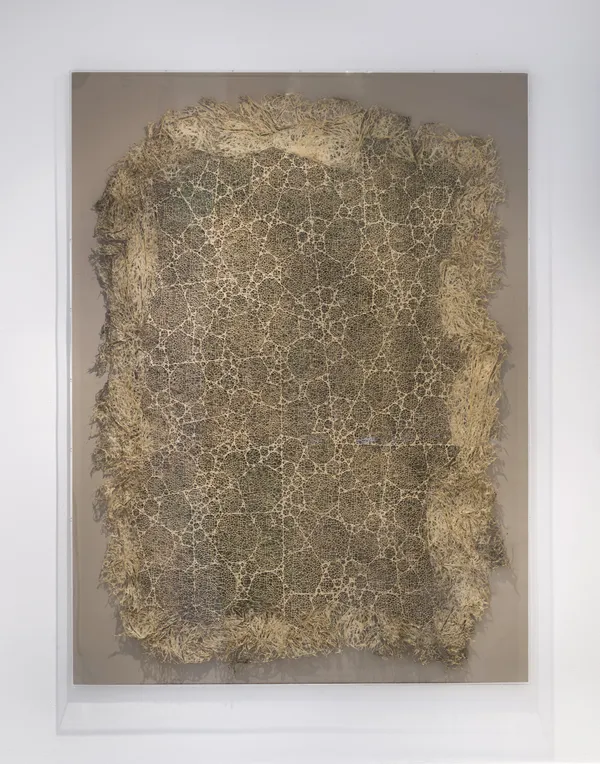
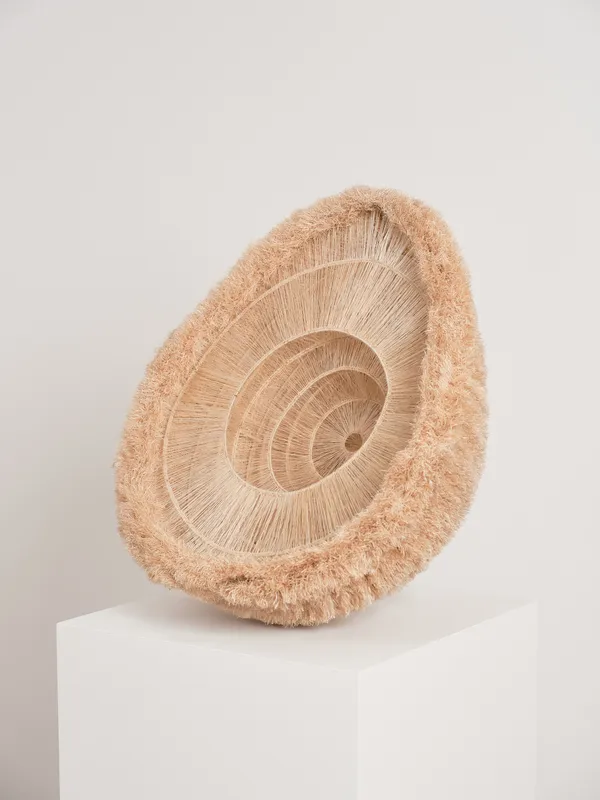
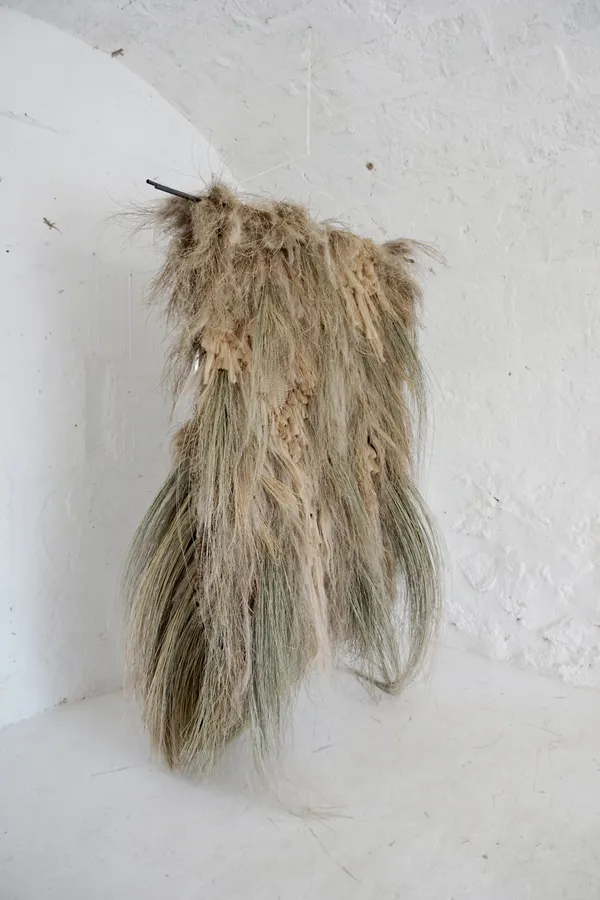
For German artist Diana Scherer, the idea becomes literal. She grows the threads that make her work. Eleven years ago she was a photographer, acutely attentive to the natural world. Her 2012 book, Nurture Studies, portrayed f lowers she had grown from seed in a variety of differently shaped constrictive vases, so that they became rootbound, creating a dense sculptural network of fibres. It was these sculptures below the flower that excited her, created by the plant’s own intelligence in conversation with the constraint of the vase. The project inspired her method of growing grass seed on buried templates, and then, once the intricate pattern has been woven by nature, stripping the roots from the carpet of grass and drying the artwork. Scherer draws her patterns both from nature— microscopic images of cell structures, for instance—and the history of human ornament. She is even inspired by the lacy patterns of car tracks in the mud. Scherer says, “It is always a wonder to me that I can collaborate with nature in this way.” If nature bends to her will, she too feels changed: “I have become a plant myself—I am much more aware of the morning and the evening, I notice very much the changing of the light hour by hour.” The empathy with nature brought about by using its own threads is clear also in Adriana Meunie’s A Wall of Wildness. She uses a combination of grasses and reeds from her native Mallorca, such as carritx, esparto, sisal, linen, estopa and antique esparto rope, to conjure works of intricate animal liveliness.
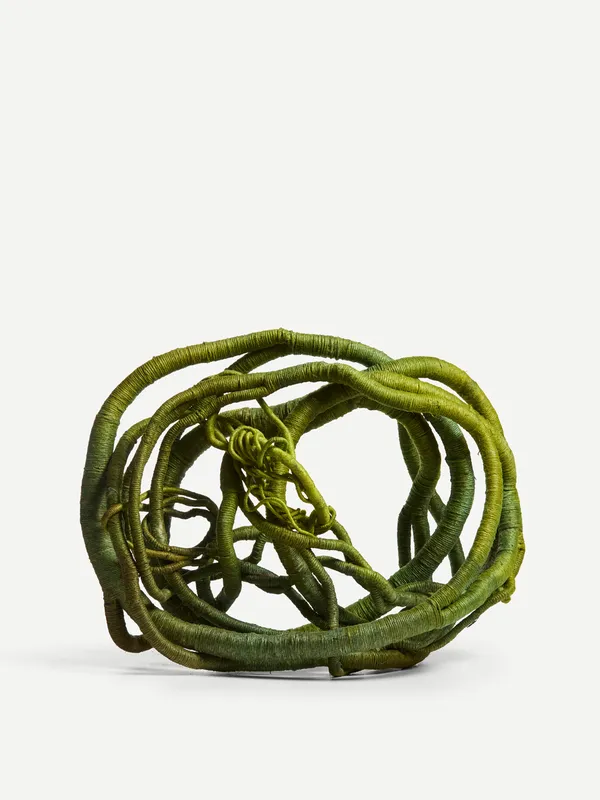
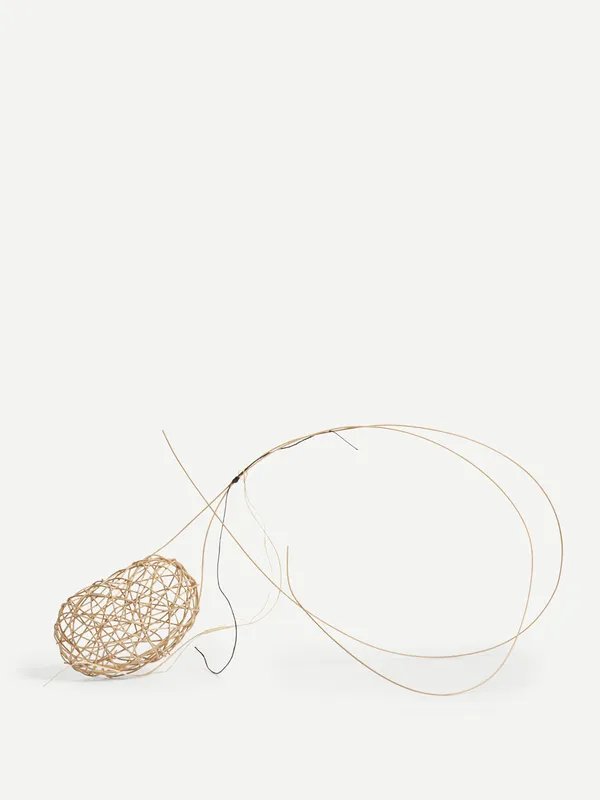
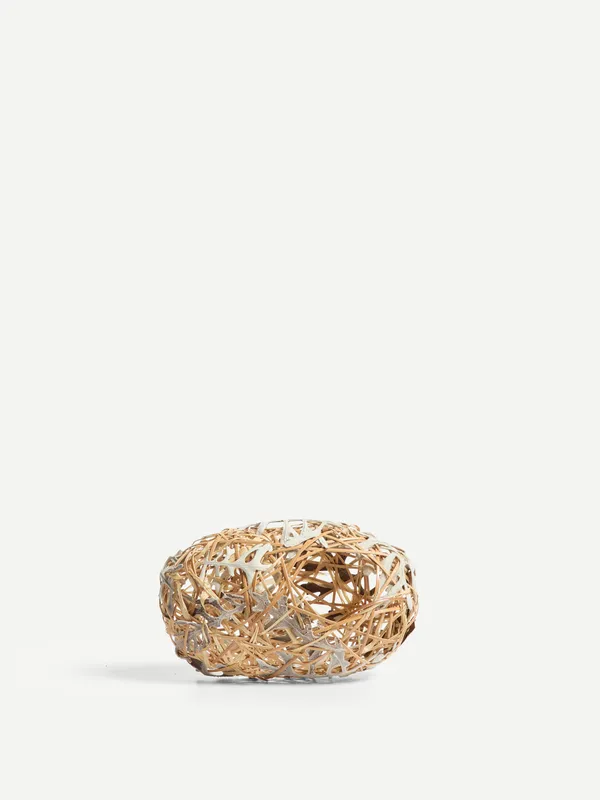
Joana Schneider, originally from Munich, does not grow her materials, she finds them. Newly enrolled in the textile department at the Royal Academy of Art in The Hague, she was determined to salvage local materials to reduce the waste that haunts the textile industry. In the harbour she found tons of marine debris—plastic rope from the fishing industry and plastic bottles. “This was very male material,” she says. “I was excited to look at textiles through this masculine lens.” At first she wrapped the ropes and viscose threads she extracted from the bottles with yarn she sources as deadstock from Dutch manufacturers, building a motorised machine to do so in order to change the surface of her material. But then she grew more ambitious, using her abundance of recycled thread to build threedimensional sculptures. To begin with, she was very much led by her source materials—“conceptually I was very much in the marine world”—but over the last two or three years she realised that she could tell other stories: “the material had become its own medium”. This has given birth to a series of works inspired by bark and trees, exploring the idea of creating an imaginary forest. In this way the thread has taken her from distress at waste to hope, with a human creativity that mirrors that of nature: “The amazing thing about textile in general is that it can grow,” she says, “you can always continue weaving, knitting, knotting”—an idea expressed also in the sculpted vine-like linen works of Aude Franjou and the accretive basketry-based pieces of Annette Mills.
Teresa Hastings is a weaver who has found creative liberation through what she calls “a journey of thread.” Initially such an expert weaver that she was offered an internship with legendary textile designer Jack Lenor Larsen, she specialised in highly technical fine weaves, introducing 27 differently coloured threads into one tight weave. But in 2016, on a visit to an ashram in India, she was asked if she would set up a project to teach local children to hand loom. This triggered several years of research—including a stint on the Shetland island of Yell—learning the most basic techniques of spinning, dyeing and hand weaving while working in the Himalayas. There she became immersed in natural dyeing processes, which have become central to her work, exploring the effects of wood smoke and stormy weather on varieties of Himalayan yarn. She had been working with a floor loom, but during lockdown, freed from the need to produce utilitarian work, Hastings began to work with tapestry, a much looser, improvisatory form of weaving. This has allowed her to work at scale and introduce other threads—Japanese washi paper, iron wire (recalling the use of iron historically in the dyeing process)—ultimately seeking in her work to capture “the undulating texture of these mountain storms, the essence of nature.”
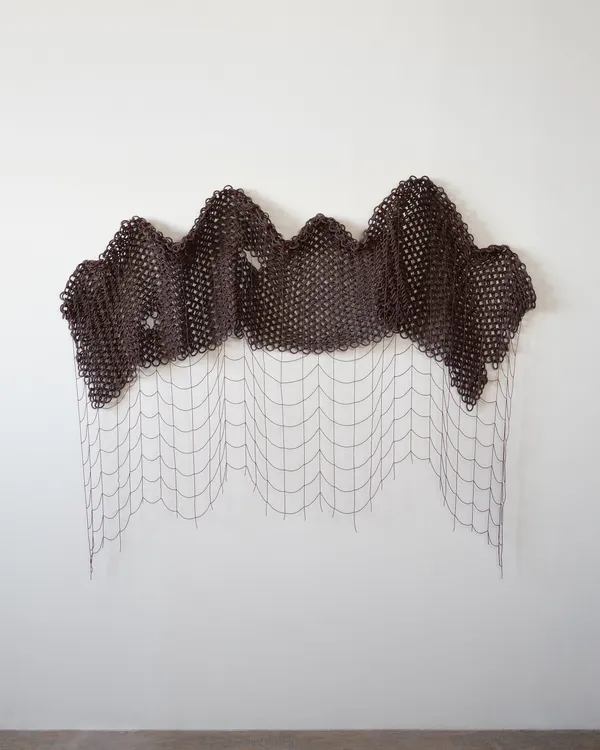
For Patrick Bongoy, the Democratic Republic of the Congo’s representative at this year’s Venice Biennale, there too was a foundational event. While he was at college in 2001, the president of the Democratic Republic of Congo, Laurent-Désiré Kabila, was assassinated. In the violent and chaotic years that followed, his son Joseph Kabila set about trying to bring order and coherence to a fractured and fractious nation. In particular he built roads. And as much as these roads threaded the nation together, they tore up the environment and littered the countryside with debris while civil war raged. Bongoy trained as a painter, graduating from the Academy of Fine Arts in Kinshasa in 2009. Through modelling he was drawn into the fashion world. But around 2010, when he felt a bodily ache to resume art making, Bongoy turned to rubber. This was a material that symbolised the bitter history of his nation, dating back to the atrocities committed by King Leopold II of Belgium, known as Rubber Leopold, who had annexed, named and exploited the Congo Free State for himself in 1885. With its ambiguous textures, rubber also epitomised the double-edged benefits of rapid industrialisation: “here is the same element that contributes positively to our lives, but then it’s also destroying our environment.” Bongoy, now in exile in South Africa following his exhibition in 2013 of a politically charged protest work, sees his role as an artist to communicate these complex histories—but also to create a balance: “I think the art is something in the middle, you know, transforming this beast [rubber], this element that is in transition, into something livable.” His ingenious use of different inner tubing threads and other industrial detritus to create magnificent, monumental woven artworks, which can be worn on the body, is a way of reconciling himself and his people with these histories, creating coherence without damage.
For Wanbing Huang also, based across the world from Bongoy in Shanghai, the cultural resonance of thread is paramount. A graduate of Central Saint Martins, Huang too started out in the fashion industry. Here she learned about structure, tension, balance and proportion, and how emotional experience can be translated into texture, weight, rhythm and movement. But gradually the restrictions of the industry irked and, like many of the artists in this show, she sought unconventional materials and experimental methods, moving her work beyond the confines of the body into space. Huang’s works in this show, made in France during a residency, are made from natural fibres and organic materials. She uses repetitive hand processes—tying, weaving, binding, layering and constructing— in a meditative process that releases in the material the memory of its cultivation, gesturing both to the climate and to the farmers who tend and reap. Huang comments, “Materials are not neutral to me; they are living archives of environmental and cultural history.” While highly attuned to her materials’ physical properties, they have also become for her, as for all the artists in this exhibition, a conceptual language that all share. As Huang summarises: “‘Thread’ refers not only to textile practice, but also to connection, continuity, and the interdependence of human bodies, environments, and histories.”
-
Works
-